
Speech-Language therapy
Could speech-language therapy be the right support for your child?
Speech-language therapy helps children who are having difficulty with communication, understanding language, using words, social communication, or certain feeding and swallowing skills. If your child is not talking as much as expected, is hard to understand, or seems frustrated when trying to communicate, this may be a helpful place to start.

What can speech-language therapy help with?
A speech-language pathologists, often called an SLP, can support children with a wide range of communication needs.
- Not talking yet or using very few words
- Trouble putting words together
- Difficulty understanding instructions
- Speech that is hard for others to understand
- Frustration because they cannot express what they want
- Social communication challenges, such as back-and-forth conversation
- Stuttering or voice concerns
- Feeding or swallowing concerns, depending on the provider

Signs your child may benefit
You may want to learn more about speech-language therapy if you notice your child
- Uses fewer words than other children their age
- Does not consistently respond to their name or simple directions
- Points, pulls, or cries instead of using words
- Has frequent frustration or tantrums related to communication
- Speaks, but is difficult for others to understand
- Repeats words or phrases but has trouble using language flexibly
- Struggles to play or interact with other childre

You do not need to know the exact "right" service before asking for help.

What does speech-language therapy usually look like?
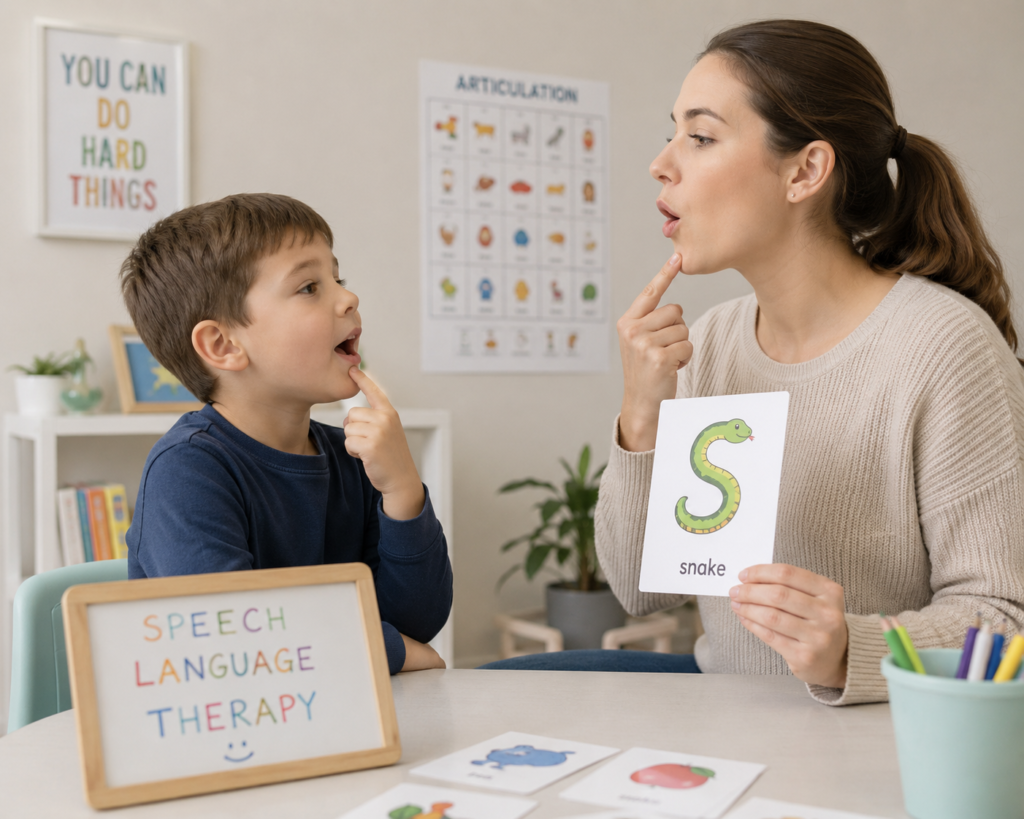
Speech-language therapy for children is usually play-based and tailored to the child’s age and needs. The therapist may work on helping your child use more words, understand language, communicate wants and needs, improve speech clarity, or build social communication skills. Parents may also be given strategies to use at home between sessions.
Testimonial
One Family's Experience
“At first we kept thinking maybe he’d just grow out of it, but over time we noticed how frustrated he was getting when he couldn’t say what he wanted. Honestly, we weren’t even sure if speech therapy was the right step, but starting therapy ended up helping so much. We started understanding him better, he was talking more, and things at home just felt less stressful.”
— Parent of a 4-year-old child
Talk to A Speech-Language Therapist
Want help figuring out the next step? If you are unsure whether speech-language therapy is the right fit, share you information below and a local provider will contact you to discuss your child's needs and whether their services may be a good fit.