Could occupational therapy help your child with daily skills or coordination?
Occupational therapy (OT) helps children build the skills they need for everyday activities like dressing, feeding, writing, and playing. It can also support children who have sensory sensitivities, coordination challenges, or difficulty with focus and independence.
Coordination and balance (appearing clumsy or unsteady)
Difficulty sitting still or focusing on tasks
Challenges with independence in daily routines
Signs your child may benefit from occupational therapy
You may want to explore occupational therapy if your child:
Avoids certain textures, sounds, or activities
Struggles with tasks like dressing, eating, or toileting
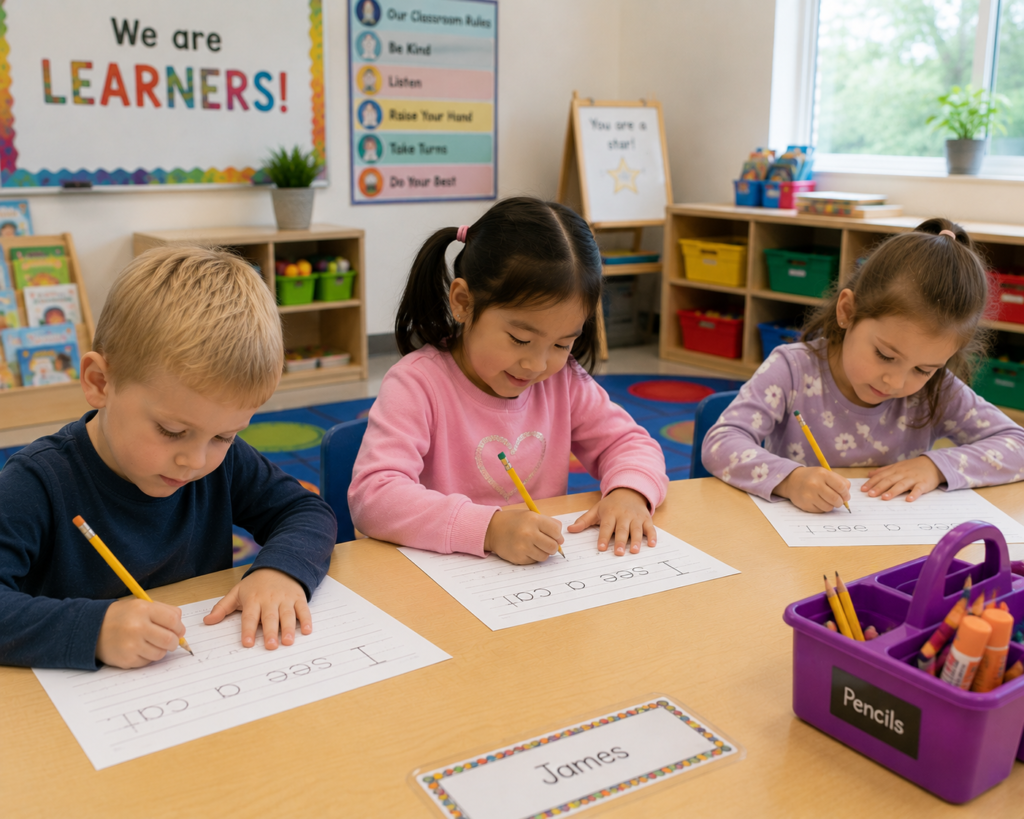
Has difficulty holding crayons, pencils, or utensils
Appears clumsy or has trouble with coordination
Has trouble sitting still or staying engaged in activities
Becomes overwhelmed in busy or stimulating environments
Has delays in developing independence skills compared to peers
YOU DON'T NEED TO FIGURE THIS OUT ON YOUR OWN
Many parents are unsure whether their child needs occupational therapy, speech therapy, behavioural support, or another type of service. A local provider can help you better understand your child’s needs and guide you toward the most appropriate next step.
what does occupational therapy usually look like?
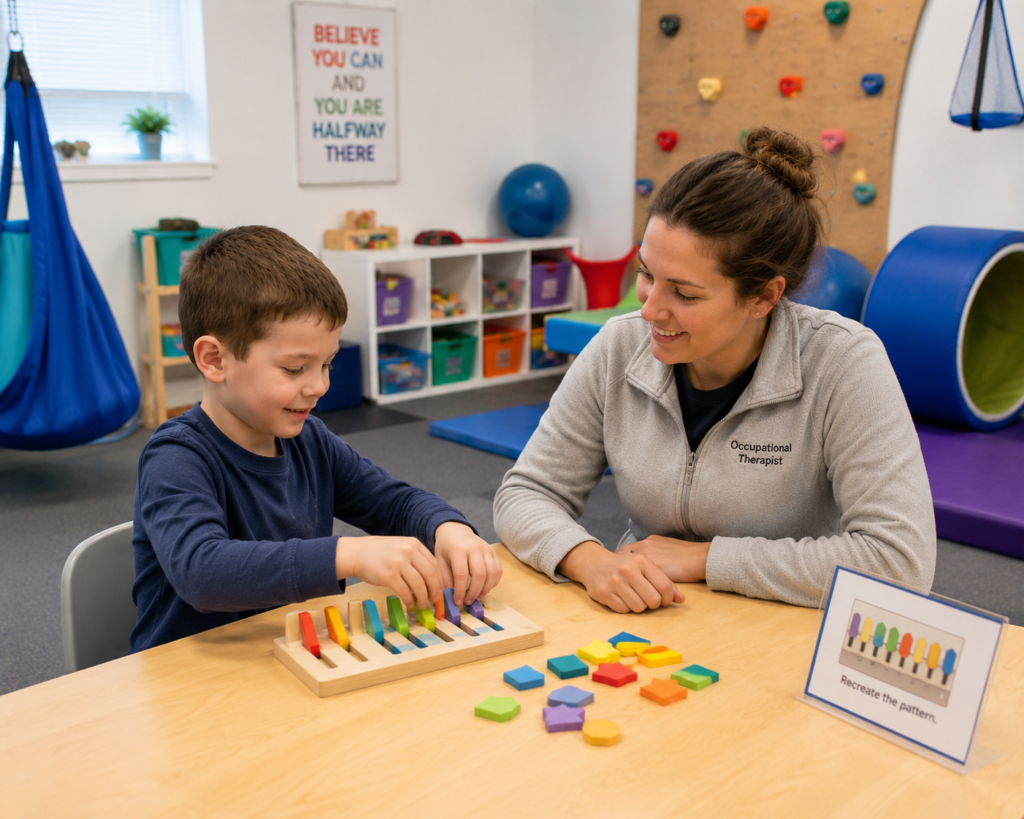
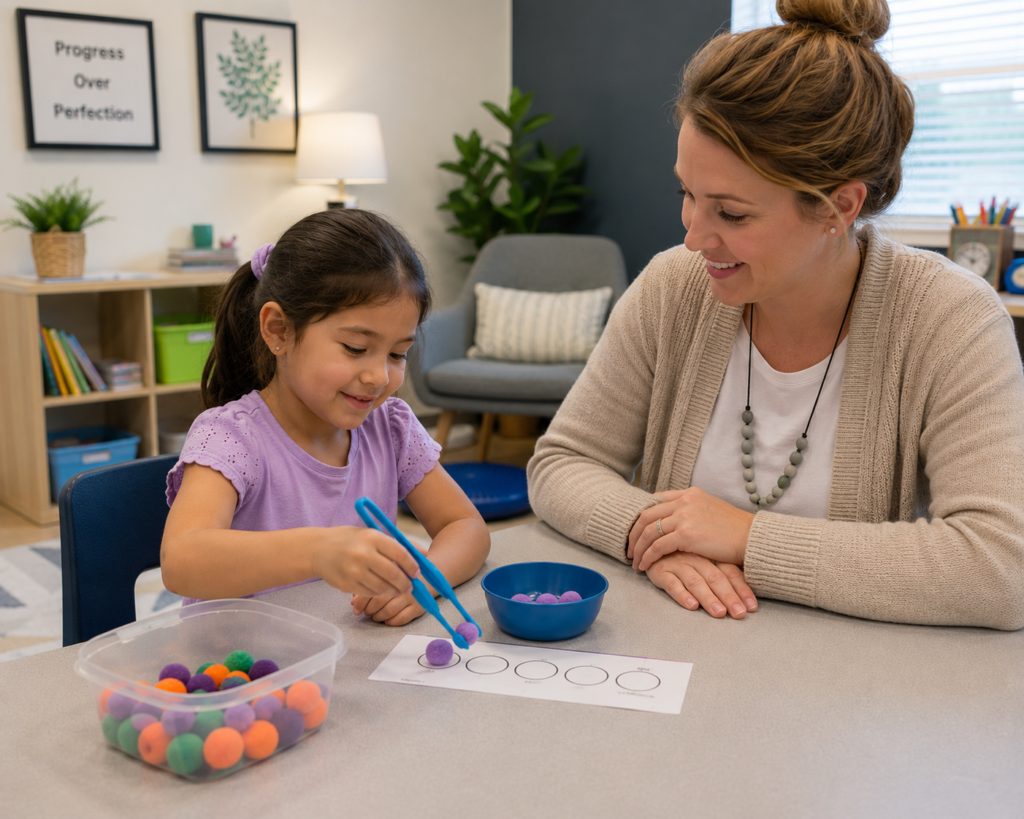
Occupational therapy for child is typically play-based and tailored to the child’s needs. Sessions may focus on building fine motor skills, improving coordination, supporting sensory regulation, and increasing independence in daily routines.
Therapists often work closely with parents and may provide strategies to use at home to support progress between sessions.
Testimonial
One Family's Experience
“We originally thought our daughter was just a little clumsy and sensitive, but over time we noticed everyday things were becoming really frustrating for her. Getting dressed in the morning, certain clothing textures, using utensils, and even sitting through activities were all a struggle. Occupational therapy helped us understand what was going on a lot better and gave us strategies that made daily routines feel much more manageable for everyone.” — Parent of a 5-year-old child
Want Help figuring out the next step?
If you're unsure whether occupational therapy is the right fit, you can share your information and ask to be connected with a local provider who works with children.
This form is not for emergencies or crisis support. Submitting your information does not guarantee that a specific service is appropriate, but it can help you connect with a provider who can discuss possible next steps.